AFRICA

Lingering regulatory headaches loom over WAF production

Ramping royalties and Kiaka ownership question overshadow positive December numbers

Lingering regulatory headaches loom over WAF production

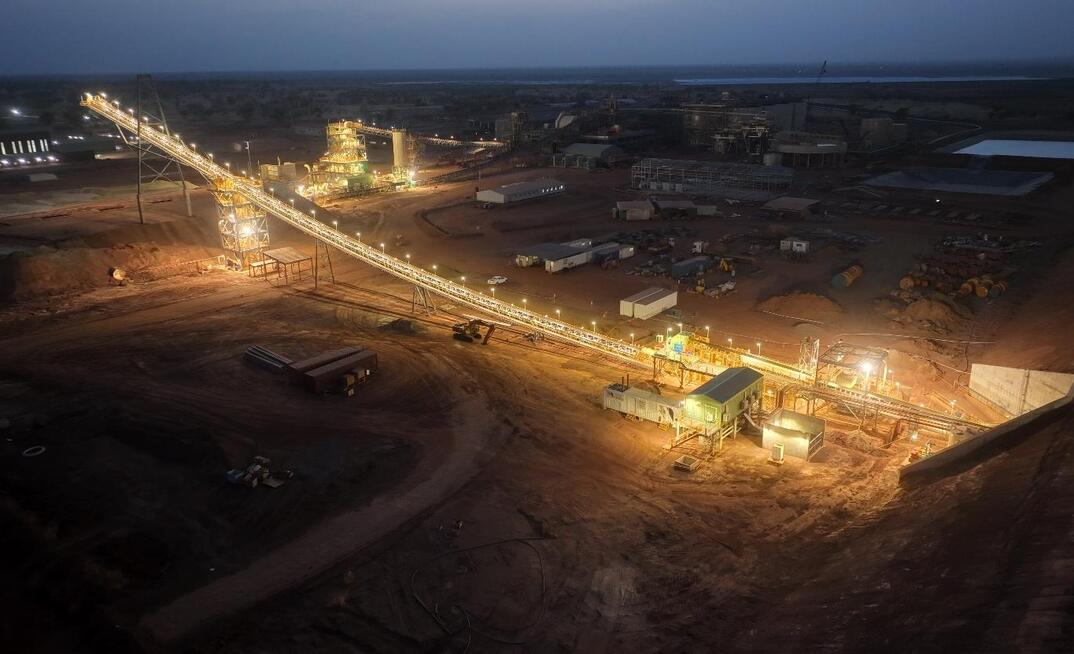
Credits: West African Resources

West African Resources generated nearly A$400 million in operating cashflow from its Burkina Faso mines and grew its cash and unsold bullion position to above $750 million last quarter, but mining regulations continue to overshadow performance. 

The unhedged miner produced 112,019 ounces of gold at all-in sustaining costs of US$1561/oz in the December period and sold 105,995oz at $4058/oz. 

Key details about a planned increase in government ownership of the new Kiaka mine remain elusive, but WAF boss Richard Hyde said the company had submitted an alternative proposal to authorities and was waiting to hear back.  

Meanwhile, as the strong gold price improved already-wide margins for the miner, Burkina Faso's ramping royalty regime took a bite out of the bottom line.  

The Burkinese government takes an 8% royalty payment for production at gold prices between $3000/oz and $3500/oz, increasing by 1% for each incremental $500/oz rise in prices.  

It means WAF's royalty costs were 19% higher in the December quarter than the September quarter, and they're only set to increase as the precious metal eclipses new record prices.  

WAF paid more than $90 million in production taxes and royalties in the December period, up from $41 million over the prior quarter.   

"[Gold prices] are well over $5000/oz as we speak," Hyde said on an investor call following WAF's quarterly report.  

He said given the speed of the gold price rise, there were no expected changes to the royalty regime at this stage.  

"I'll be back in the country in a few months' time, and I'll definitely raise that with the administration," Hyde said. 

'Market price' for Kiaka stake?

Hyde and the WAF management team are still in talks with Burkina Faso authorities about a government plan to buy 35% more of the ramping-up Kiaka operation — on top of the 15% free-carried interest it already holds.  

Hyde said there were no new details to offer about the talks, though discussions thus far had been "good and cordial".  

When pressed by analysts, he said the Burkina government had indicated it was happy to pay "market price" for its additional share in Kiaka, though what authorities deem such a price to be remains unknown. 

Kiaka has been forecast as a 20-year, 243,000oz-per-annum operation. 

When news first broke last August of Burkina Faso's desire to up its Kiaka stake, gold prices were at circa $3400/oz. One analyst at the time calculated a notional value of A$1.6 billion for a 35% stake in the operation. 

With gold prices up more than 50% since then, "market value" could be estimated in the $2–3 billion range — a mighty sum for a government to pay, even at the lower end.  

"We have countered with a proposal saying that if you have a look at our current quarter, we paid indirect taxes and royalties of US$90 million. So, clearly, we're a very good partner to the government," Hyde said.  

"The government already gets a significant proportion of cash flow from mining operators in Burkina, which is getting close to 60% of cashflow at the current gold price — with the escalating royalty.  

"That's a significant proportion of cashflow." 

He said in WAF's alternative proposal to Burkinese authorities demonstrated higher returns on investment given the government already owned other assets that weren't generating any cashflow. 

He did not offer any other details about what the proposal might entail. 

December quarter by the numbers 

In its first full quarter of operations, Kiaka produced just under 63,000oz of gold at US$1649/oz. 

Open-pit mining and processing continue to ramp up on-schedule.  

WAF's current mainstay Sanbrado operation produced 49,732oz — circa 17% lower than the September quarter, mostly due to lower underground grades and tonnes mined. 

Nevertheless, full-year group gold output of 205,228oz at $1348/oz was towards the upper end of WAF's 2025 production guidance of 190,000–210,000oz, with costs just under the guided $1350/oz.  

WAF will publish its 2026 guidance and updated capital management strategy later this quarter.  

Shares in the miner were up 2.7% to A$3.81 on Wednesday, just below its all-time high of $3.87 reached earlier this week.  

WAF is capitalised at $4.3 billion.  

Expert-led Insights reports built on robust data, rigorous analysis and expert commentary covering mining Exploration, Future Fleets, Automation and Digitalisation, and ESG.

Expert-led Insights reports built on robust data, rigorous analysis and expert commentary covering mining Exploration, Future Fleets, Automation and Digitalisation, and ESG.

editions

Future Fleets Insights 2026

Exclusive research for the Mining IQ Future Fleets Insights 2026 shows mining companies must invest more in decarbonising if they are to meet CO2 targets

editions

ESG Index 2025: Benchmarking the Future of Sustainable Mining

The ESG Index provides an in-depth evaluation of the ESG performance of 60+ of the world’s largest mining companies. It assesses companies across 10 weighted indicators within 6 essential ESG pillars.

editions

Automation and Digitalisation Insights 2025

Discover how mining companies and investors are adopting, deploying and evaluating new technologies.

editions

Mining IQ Exploration Insights 2025

Gain exclusive insights into the world of exploration in a comprehensive review of the top trending technologies, intercepts, discoveries and more.