

Researchers have introduced a methodology for calculating mine closure risk ratings for active mines in South Africa that also has applications across the globe.
The team, led by Megan Cole from the University of Cape Town, identified three key risk components - the likelihood of closure, the social impact on host communities, and environmental repercussions - forming a quantitative assessment framework that can be used to identify and address closure risks.
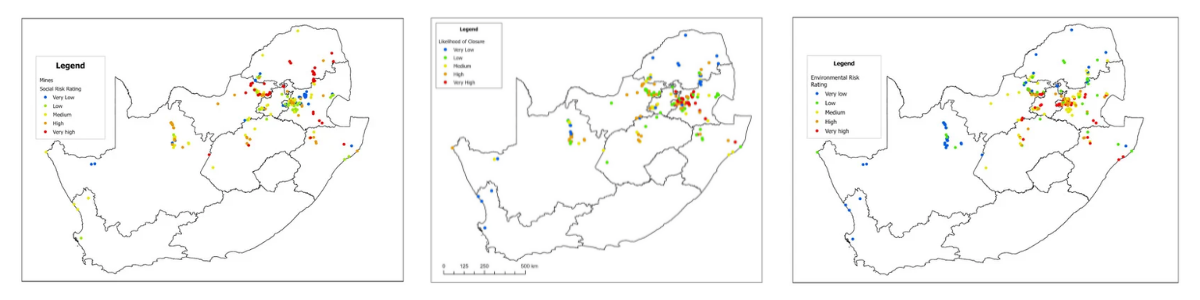
The system was then tested on 10 coal and gold mines, creating a series of maps available for public use in a South African Mine Closure Risk and Opportunity Atlas.
The challenge of mine closure
YOU MIGHT ALSO LIKE
South Africa's mining industry, with 230 active mines directly impacting nearly 6 million residents in surrounding communities, faces significant concerns regarding mine closure.
Closure not only poses environmental risks such as water pollution and land degradation but also has social impacts, including sudden job losses and disruptions to the local economy.
Traditionally considered an end-of-life occurrence, mine closure is now viewed with a transitional approach, incorporating ongoing considerations to mitigate long-term damage.
Central to this transitory approach is identifying and managing the risks associated with closing a mine. But because the effects of mine closure are often inter-twinned - for instance, biodiversity factors can influence water availability, which in turn causes social issues - alienating and identifying risks is a complicated process.
Identifying risks
The researchers adopted three-pronged approach was applied to a dataset with 221 active mines and 360 mining communities, they then identified influencing factors for each component.
For example, factors like the life of the mine, mineral resources, commodity markets, and costs influenced closure likelihood, while host community population, social vulnerability, mining jobs, and dependency ratio influenced social outcomes. Environmental risks were influenced by factors such as the duration of mining, distance to protected areas, and water threats.
The methodology was applied to assess 10 mines with diverse contexts and communities, producing maps highlighting high-risk areas. Researchers emphasize that using this rating system can directly inform the development of effective mine closure plans, addressing specific risks associated with each mine before and after closure.
Applications and implications
The use of a mine closure rating system, both within and outside South Africa, offers diverse applications for reducing closure risks. By pinpointing high-risk environmental impacts, the system aids in thorough and targeted environmental risk assessments, leading to improved mitigation strategies.
It also facilitates the accurate determination of financial provisions for mine rehabilitation, ensuring compliance with Regulation 11(1) of Government Notice R1147.
Future Forums, designed to involve communities in closure planning, can leverage the system's data to facilitate informed discussions and collaboration, according to the team.
Both local municipalities (through Integrated Development Plans) and district/provincial governments can utilise risk ratings to inform spatial planning efforts, guiding development away from high-risk areas.
As the national Department of Mineral Resources and Energy prepares for further public participation in the National Mine Closure Strategy, the system's insights can contribute to its implementation.
By comprehending closure risks, authorities can make informed decisions on post-closure land use, exploring options like agriculture, forestry, tourism, renewable energy, or community facilities. The risk ratings, along with underlying data, can play a crucial role in identifying the most viable and sustainable post-closure options, the team notes.
Read more about closure risks in the Mining Journal Intelligence World Risk Report 2023