

The mining industry must shift its focus to new technologies to unlock future copper production, as traditional exploration no longer provides a reliable path to growth, Freeport-McMoRan chief executive Kathleen Quirk told Mining IQ.
With electrification and renewable energy growth expected to ramp up copper demand in the coming years, few significant greenfield projects are lined up for production and discoveries of major copper districts are rare, Quirk said in an interview for Mining IQ's forthcoming Leadership Insights 2025: Unlocking Growth report.
"There have been some discoveries in the Democratic Republic of the Congo and some other remote areas, but, for the most part, you can't rely on exploration like you can in certain other industries to put you on a path to growth in the near term," she said.
Instead, companies should look to new and emerging technologies to deliver future output growth, according to Quirk.
"The mindset of the industry needs to change to focus more on investments in technology to bring on copper production in the future, as opposed to relying on traditional exploration.
"People are using data analytics to define ore bodies. Technology is going to help with greenfield exploration, but our industry needs to invest more in technology to get more copper at a lower cost from existing resources. That's a real opportunity," Quirk said.
Mining IQ's Leadership Survey, conducted for the Leadership Insights report, showed 80.1% of mining professionals expect new and emerging technologies to play at least a moderate role in delivering output growth across the industry by 2030.
About four in 10 (39.1%) said the role would be significant, with 11.8% saying technology would play a bigger role in delivering growth than any other factor. The survey was completed by more than 200 respondents, including mining and exploration company employees, investors and mining services providers.
Tech deployment
While Freeport continues to invest in near-mine exploration to extend the life of its operations, technology is playing an increasing role in delivering growth, including the company's target of increasing copper production in the US by 1 Blbpa.
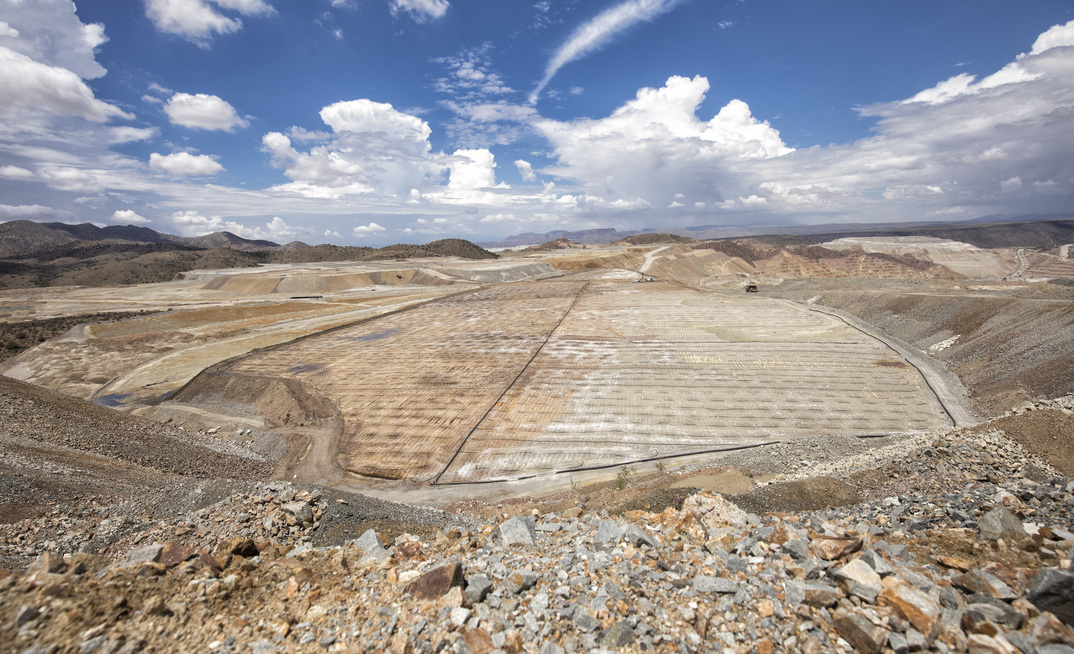
One key example is the company's Leach to the Last Drop initiative, which uses new leaching technologies to recover additional copper from its stockpiles of previously mined material in the US. These stockpiles contain more than 40 billion lb of the metal, according to Quirk.
Freeport is producing about 200 Mlbpa of copper from this leaching initiative. The company plans to double this figure over the next couple of years and is targeting further growth to 800 Mlbpa, a figure that could be achieved using technologies currently at an advanced stage of development.
"This is an opportunity to produce copper at a very low capital intensity and incremental operating costs, because a lot of the costs have already been incurred, and with a very low carbon footprint," Quirk added.
Cost reductions
Arizona-based Freeport, one of the world's biggest copper miners, with production of 4.2 Blb (1.9 Mt) last year, is also seeking to use technologies, including automation, to lower costs in the US.
"While our resources in the US are enormous, grades are very low, relative to international locations, and it's incumbent on us to find ways to mine and process that ore at the lowest possible cost," Quirk said.
"In light of emerging technologies, we're rethinking all our processes and aim to bring down costs in stages, to well below the current level of roughly US$3/lb."
Lowering costs through technology could also lead to further production growth by expanding the resources that can be mined economically in the US, the CEO added.
The full interview with Kathleen Quirk will be published in Mining IQ's Leadership Insights 2025: Unlocking Growth report, due out in August. The report features interviews with executives of 17 mining companies and full survey results.