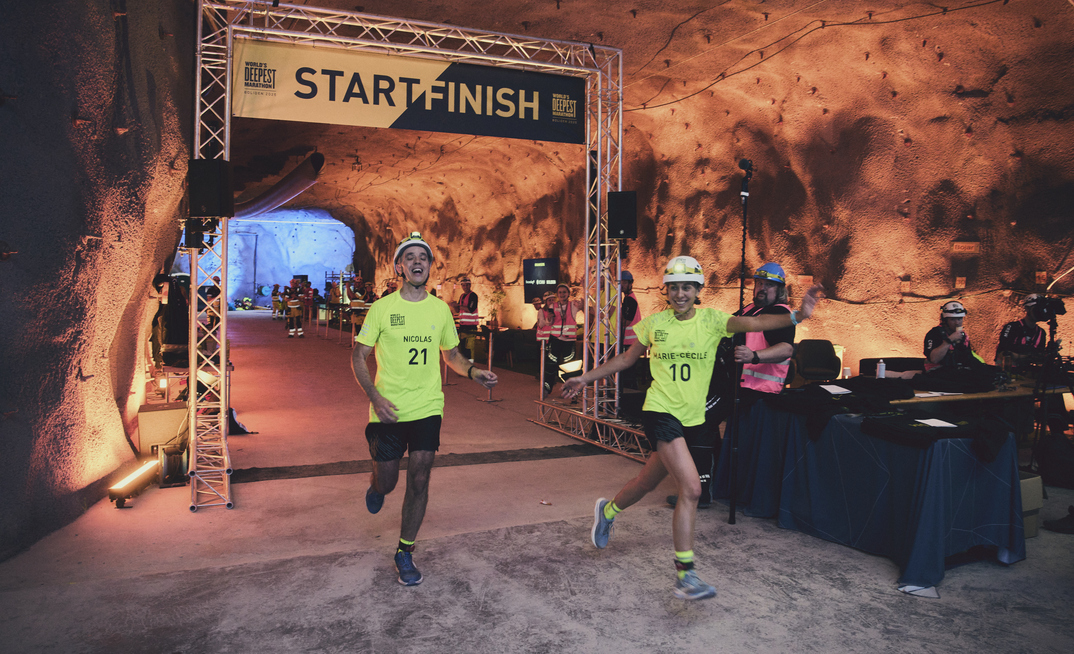


History was made 1,120 metres below the forests of central Sweden late last month, when 55 runners descended into Boliden's Garpenberg zinc mine to complete what organisers call the world's deepest marathon.
It was an experiment in endurance and engineering that put on display the industry's incredible technological development.
The 42.2-km run demonstrated that modern mining can be as safe, high-tech and humane as the most advanced workplaces on the surface.
Runners took their marks on October 25, with temperatures hovering around 24°C and 72% humidity. The event was organised by learning and development firm BecomingX in partnership with Boliden and the International Council on Mining and Metals (ICMM).
YOU MIGHT ALSO LIKE
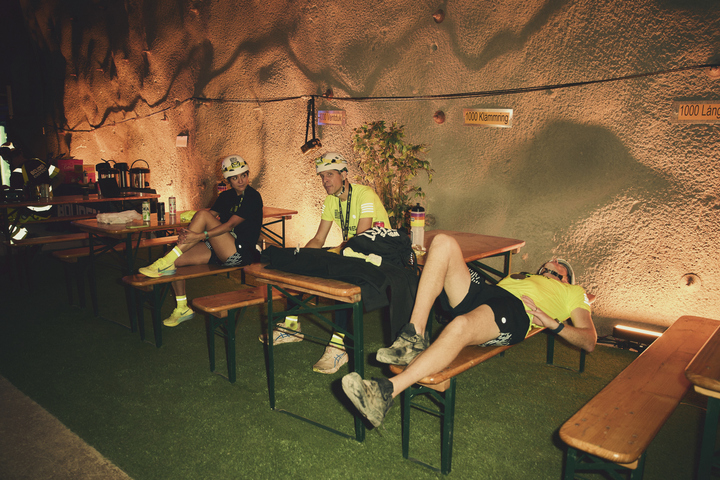
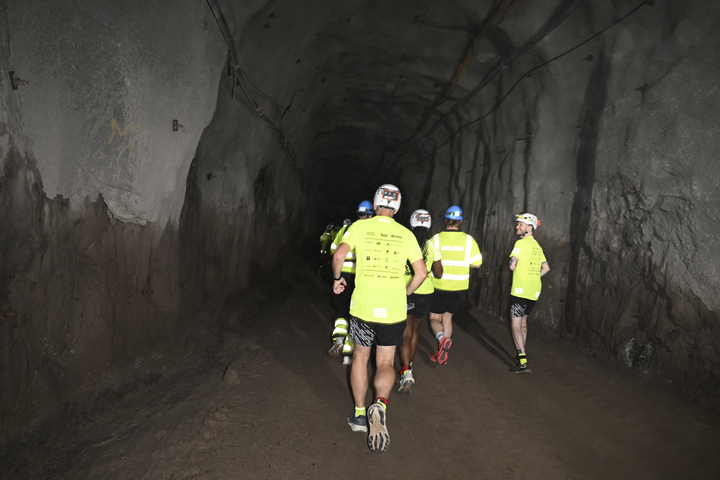
With the mine shaft in near complete darkness, runners were equipped with helmets, headlamps and safety gear. They began by moving across a dimly lit drift almost two kilometres long. Eleven laps later, they emerged sweating and elated in equal measure.
For Boliden, one of Europe's oldest and most technologically advanced miners, the marathon was a way to turn its infrastructure into theatre and a proof point that underground environments can be both habitable and safe.
"We are immensely proud that Garpenberg has hosted this world-record-breaking event," said Mikael Staffas, Boliden's chief executive, in a statement. "With outstanding air quality and cutting-edge technology making this feat possible, Boliden continues to lead the way in innovation, safety and responsible mining."
Behind the scenes
The concept began, as many good ideas do, as a half-serious conversation. "It started off, actually, as a personal project for me," said Paul Gurney, co-founder and chief executive of BecomingX, in a candid chat with Mining Magazine. "I've always been fascinated by mines. I used to work with a number of mining companies as a consultant, and I thought, what would it be like to actually run a marathon in one?"
When Gurney first floated the idea to Rohitesh Dhawan, president and chief executive of ICMM, his reaction was predictably sceptical.
"His first reaction was probably the same as most people's," Gurney recalled. "‘This is ridiculous. You're insane. Why are you even thinking this?'" But Dhawan came around.
"The first [goal] was to help people see mining in a different light," Dhawan said. "By doing something everybody can relate to. [Everyone knows] how hard it is to run a marathon. So to now think about doing that underground, we thought would make people rethink what they know about mining."
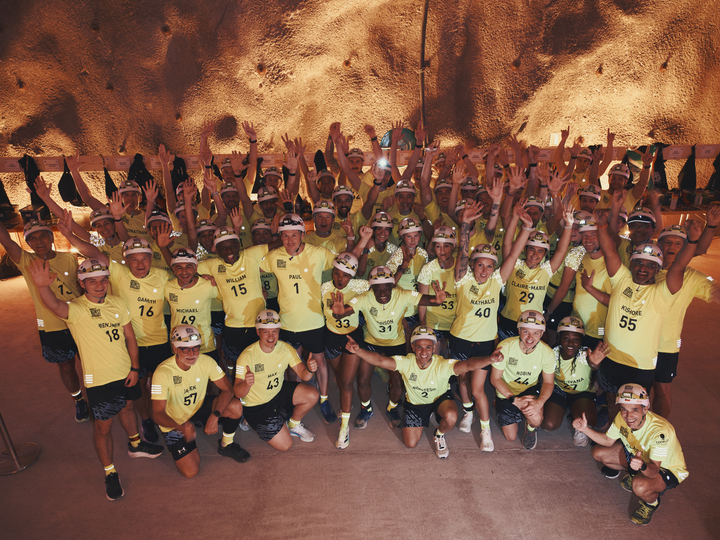
Gurney and Dhawan took the idea further, resulting in 55 runners, from their 20s to 60s, representing 18 countries and a range of professions making the descent. All runners finished - the fastest in three hours and 17 minutes and the slowest in just over seven hours.
"It was never a race," Dhawan said. "It was always meant to be a challenge that each individual was taking on. And it was just so gratifying to see that everybody finished."
If the concept sounds quixotic, the execution was anything but. The organisers spent 18 months planning logistics and safety procedures, with Boliden engineers designing a course that could withstand both the pounding of trainers and the scrutiny of safety inspectors.
"We did a lot of work in advance to make sure that this was going to be an extraordinary experience," Gurney said. "Of course, it's tough. Running a marathon is always hard. Doing it underground adds additional challenges. But for me, it was just extraordinary. We were running in a place that no human, up until they made that mine, had ever been. Running through billions of years of history. It's hugely inspiring."
Just you and your headlamp
For Dhawan, a veteran of a dozen marathons, the subterranean version was by far the hardest. "The darkness was the most challenging part," he said. "Towards the end, most people had finished, and a few of us were still running through the tunnel. There were maybe five or ten minutes before you saw another person. It became really disorienting."
"At one point I even started to hallucinate. I started to think that the darkness in front of me was a wall, so I would try and escape it, but there was nothing there. It was just darkness. And so you almost become a bit hypnotised being in that environment for that long."
Yet he described the experience as strangely serene. "It was very meditative. It really allows you to go into your mind, into your thoughts. There's no sound around you. No sensory stimulation. Just you and your headlamp."
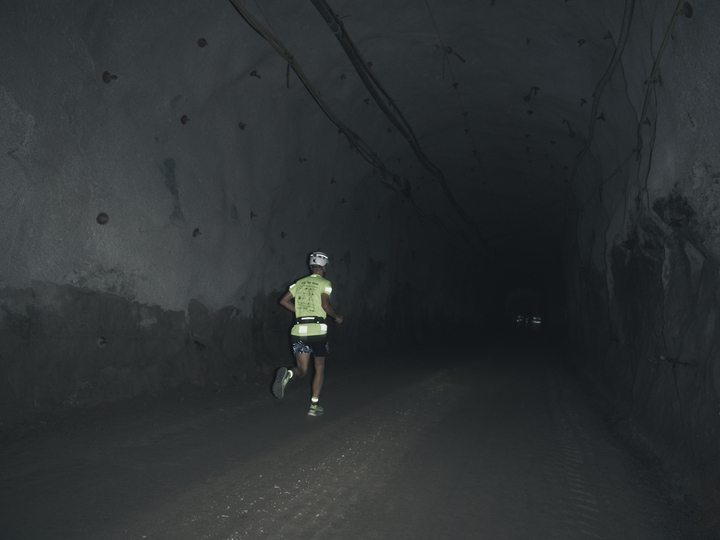
Garpenberg's tunnels undertook a minor makeover for the event. To offset the monotony, Boliden created "zones" along the drift with lighting projections and visuals. The mine's ventilation system ensured that the air was clean and plentiful.
"Not only is there enough oxygen down there, there's more than there is on the surface," Dhawan said. "If you were to run the London or New York marathon, you'd be breathing more polluted air than what we were breathing down there."
Amongst the runners was Minecraft streamer Callum "Seapeekay" Knight, who was watched live by 22,000 followers on Twitch. Knight became the first person to livestream the video game from inside a mine, surprising many above the surface.

For many watching, the most astonishing revelation was that a mine 1.1 km underground had Wi-Fi strong enough to broadcast in real-time.
"People were asking, ‘How are you streaming from the bottom of the mine?'" Dhawan said. "‘Why does a mine even need Wi-Fi?' And when they heard about autonomous trucks and automated systems that now depend on Wi-Fi, it made them rethink what mining really is."
Addressing misconceptions
The event raised US$600,000 for the BecomingX Foundation, which supports education and skills programmes in Africa, and for the Wild at Heart Foundation, which funds global animal rescue projects. "It means thousands of kids getting essential life skills training, and tens of thousands of animals rescued from neglect or injury," Dhawan said.
"There are lots of misconceptions about mining," Gurney said. "I'm not a mining guy. I'm on the high-performance and sports side. But this really opened it up to audiences that had no understanding whatsoever. We had a million people on Instagram seeing our posts. Twenty-two thousand watching live on Twitch. Everybody who engaged with it thought, this is amazing. It's changed my view of mining."
Among younger participants, that shift was particularly pronounced. "Going into the experience, when we asked them what they thought it's like down there, they said, ‘Dark, dirty, guys with pickaxes covered in coal,'" Gurney said.
"These are images from the 1940s and 50s. But they were blown away to see that mining is not that. It's high-tech, automated, and clean. It's women and men sitting in control rooms with multiple screens and joysticks. It's Wi-Fi, not canaries."
"It demonstrated what modern, responsible mining looks like, and the innovation that sits at its core," Dhawan said.
Dhawan agreed that youth engagement was one of the marathon's quiet triumphs. "I hope young people view this challenge as a sign of how far mining has come, and it makes them more curious to find out more about the industry," he said.
"It was always the intention to do something physically challenging in an environment that seems the least likely place to do that, to make people curious and ask: how is that possible? What is it about the mine that allowed them to do it?" He added that through this curiosity, young people might discover "what an interesting, welcoming, open-ended industry this really is."
Record breaking
It was also, by all accounts, a study in solidarity. "We had competing miners from all over the world taking part," Gurney said. "But it was probably the most collegiate event I've ever been part of. Running past every single person, cheering their name, hearing ‘We've got this record!' That was just extraordinary."
Despite heading one of mining's biggest consortia, Dhawan too found himself learning more about the industry.
"It certainly deepened my respect for people who work underground with shifts that can be up to 12 hours, not having the ability to see daylight," he said.
"It is a very impressive level of commitment. They get a lot of pride and joy out of it, and you can see why. You put a lot of yourself into this industry, knowing you're doing it for a bigger purpose."
Will there be a 2026? Sure there will be
By the time the last runner emerged, two Guinness World Records were pending verification: the deepest marathon ever run, and the deepest underground marathon distance completed by a team.
"It captures the true spirit of adventure and resilience," Gurney said. "Running a marathon is tough enough, but completing one over a kilometre underground, with low visibility and high humidity, is a true testament to what humans can do."
Plans are already afoot to go deeper, both Gurney and Dhawan confirmed. "We've been overwhelmed by the interest," Dhawan said. "If we were to do it again next year, we would aim to go deeper and break the record again, perhaps even turn it into a series where each year we go to a new mine."
"Will there be a 2026? Sure there will be," Gurney said.
For an industry often accused of lacking romance, mining has found, in this unlikely endurance event, a moment of poetry. In the depths of the earth, under fluorescent light and the din of machinery, the world's (soon to be confirmed) deepest marathon proved that the limits of body, mind and industry are all, in the end, negotiable and ever in flux.