

ESG metrics improve among leading Australian miners
Australia's leading mining companies are making headway on ESG targets, with female participation rising and injuries and carbon emissions falling.
New data from Mining Journal Intelligence's (MJI) ESG database shows significant improvements in all three metrics between 2021 and 2024 across a pool of 12 major Australia-listed producers, or companies with significant mining operations in the country (the companies included are named in the graphs).
Injuries drop
Average injury rates among the 12 Australian mining companies have declined by 10% since 2021.
The group's average total recordable injury frequency rate (TRIFR) fell to 4.46 per million hours worked in 2024, down from 4.98 in 2021 (the all-injury frequency rate was used for Rio Tinto, as no TRIFR figures were found). If current trends were to continue, the group would achieve a zero TRIFR by 2055.
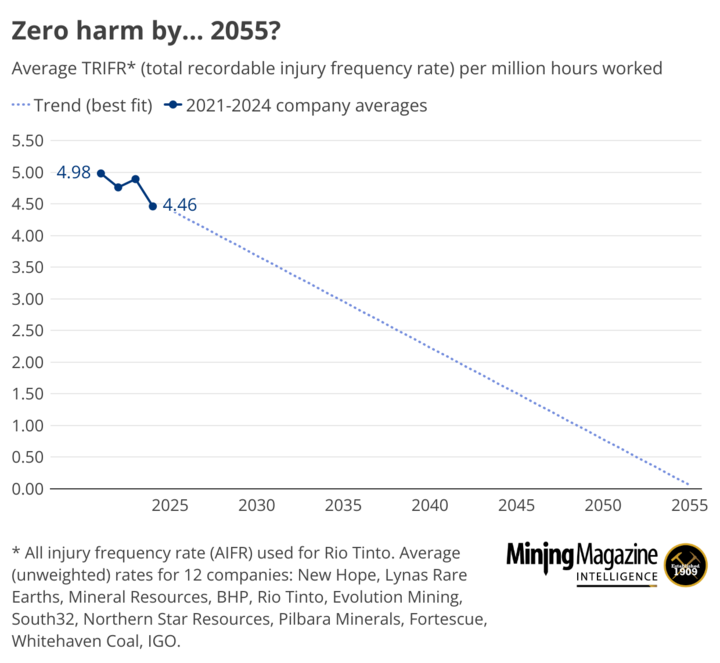
However, this projection is subject to numerous significant caveats. First, a zero injury rate may not be realistic, at least while humans are needed on site. Second, injury trends are very unlikely to be linear. Third, the pace of deployment and the impact of technologies that may deliver further safety improvements, such as automation, remain uncertain.
But the direction of travel is clear: injury rates among Australian miners are steadily improving.
Full fatalities data will be reported in MJI's ESG Mining Company Index 2025 report, due out in the coming months. Industry body ICMM reported a rise in deaths among its member companies to 42 last year, from 36 in 2023.
Female participation rises for fourth consecutive year
Female representation among the 12 Australian mining companies increased by four percentage points, from 20.4% in 2021 to 24.0% in 2024.
This trend—an average gain of around 1 percentage point per year—suggests the group could reach gender balance by the mid-2040s, if progress continues at the current pace.
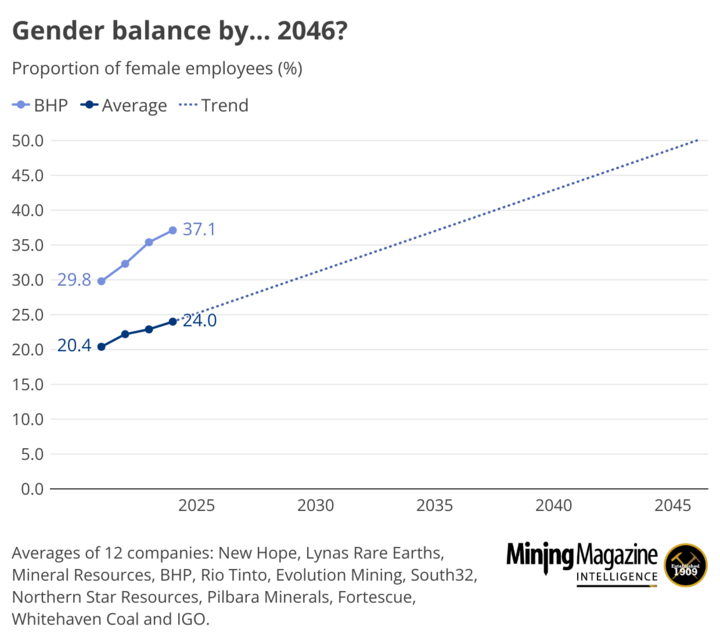
BHP leads the cohort, reporting 37.1% female workforce participation in 2024, up from approximately 30% in 2021. At this rate, BHP could reach a 50:50 gender balance well ahead of the broader group.
Projections should be viewed with caution, as workforce shifts rarely follow a linear path. Nevertheless, the data indicates steady and measurable progress toward greater gender diversity in the sector.
Falling carbon emissions
Total Scope 1 and 2 carbon emissions from nine major Australian mining companies fell by 15% between 2021 and 2024, from approximately 55 million tonnes to 47 million tonnes of carbon dioxide equivalent (CO₂e) (three of the 12 companies were removed from the pool as full emissions data were not retrieved for each year).
If this trajectory continues, the group could achieve zero operational emissions by 2042, ahead of the Paris Agreement target of net zero by 2050.
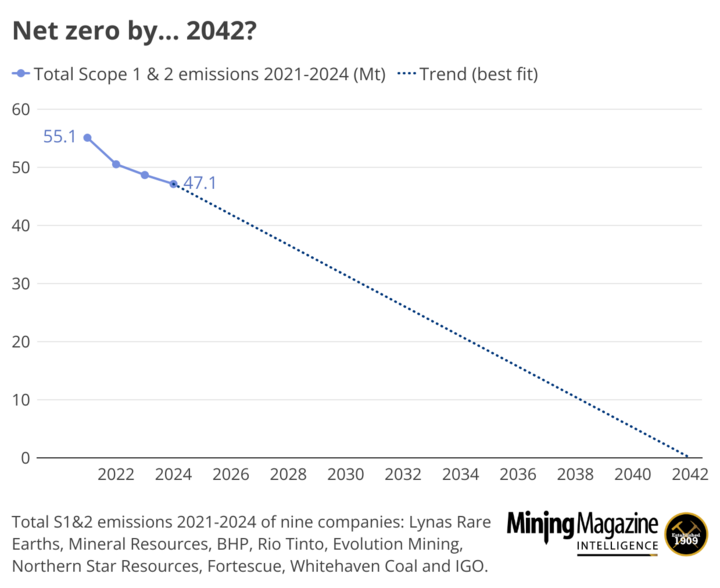
Similar caveats apply. The emissions decline has so far been driven largely by Scope 2 reductions, primarily through a switch to lower-carbon electricity sources. Progress on Scope 1 emissions, from onsite fuel use, is likely to be slower and will depend on the technological development and adoption of low- or zero-emissions mobile equipment and energy systems.
The carbon emissions data are also not adjusted to reflect production volumes, which may have varied significantly.
A full analysis of emissions intensity (average carbon emissions per ounce of gold or tonne of copper produced, for example) will be completed for the ESG Mining Company Index 2025 report. The report will rank the ESG performance of more than 60 of the world's largest mining companies, across at least six categories (safety, diversity, social investment, carbon emissions, water efficiency and land use).
- Have your say on mining risk – and receive free insights!
MJI's World Risk Survey 2025 is now live. Rate up to three jurisdictions here (it takes 10 minutes) and receive a free regional section of the World Risk Insights 2025 report when it is published later this year.
By Celia Aspden
Edited by Sam Williams
We would love to hear your feedback!
Please email sam.williams@aspermont.com with any questions, suggestions, or comments about our research.